1 Introduction
Engineering practice receives ongoing attention and public criticism in publications.1 We premise that this deters investment into new product development (NPD) from Small and medium-sized enterprises (SME) 2 and micro organisations. Given the advent of new technology emerging with free or tiered and low-cost access, plus an abundantly skilled workforce, the opportunity lost is conceivably high. To explore the extent to which engineering is culpable, we empirically explore what is involved in developing successful systems.
The study explores themes of ideation and risk around the opportunities that arise due to lowered barriers to access from the engineering practice perspectives on applying emerging technology to a business use case. It emphasises value-adding through iterative development and as a learning process. The focus is on exploring Named Entity Recognition (NER) in the context of New Product Development (NPD) within the Customer Journey Mapping (CJM) knowledge domain.3
The project takes on the mantle of Engineering and is characterised as a thought experiment analysing complex problems that benefit from proof of concept and prototyping. It addresses issues that arise when working with opportunities perceived as high strategic value. We aim to support a worldview in which Engineers fully engage their skills and abilities by thinking in design terms to address and resolve problems. This view has traction, 4 5 6 celebrating a centenary within the engineering zeitgeist. 7
Systems Thinking (ST) can be reapplied or adapted to new topics. Businesses in crisis may limit engineering practices by forging rigid chains of command, resulting in actions that contradict the principles of engineering best practices in challenging times of transition. Figure 1 posits a cautionary interpretation of the Agile Manifesto.
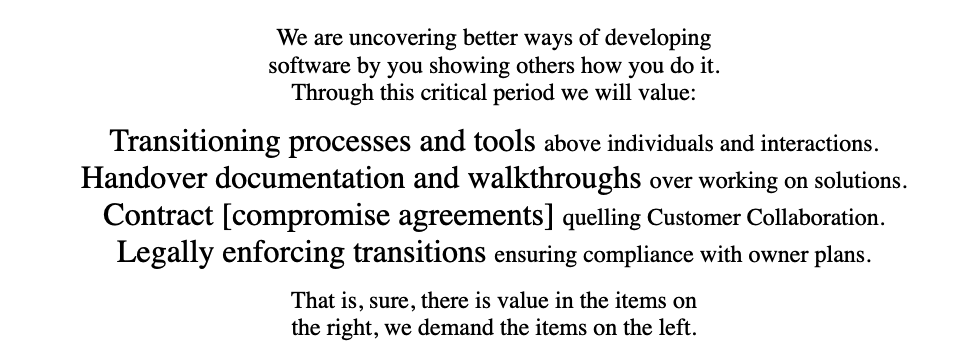
We assess that engineering seeks to realign itself with the Agile Manifesto.

A primary motivation for the engineering enquiry is to underline the extent to which access barriers have dropped with the high availability of powerful, low-cost solutions that run on affordable, high-availability platforms. It seeks to address this question for business practices that fit the [UK] Small and Medium-sized Enterprises (SME) micro-organisations classification banner.
SMEs accounted for 99.9% of the total number. Importantly SMEs employed 61% of the private sector workforce which was 16.3 million employees. They also earned 52% of the turnover of UK plc which is equivalent to £2,300 billion.
1.1 Named Entity Recognition (NER).
As a fundamental part of Natural Language Processing (NLP), its primary goal is to locate and classify predefined categories of named entities within unstructured text. A named entity is a “real-world object” assigned a category name, like Person, Organisation, Location, Date and Time, Language, Event, and Monetary or numeric value. The NER engine automatically finds and tags objects and concepts it detects in sentences.
1.1.1 Why NER is Important.
NER helps transform unstructured text into structured information, enabling tasks incorporating information extraction, content categorisation, enhanced search, and customer Feedback Analysis.
By adapting emerging technology like NER, the job seeker can tilt the balance in their favour. Specifically, NER can be applied to cut through the noise and pick out key points of a Job Description. When considering multiple job applications, the seeker can use NER to help measure them in terms of the best fit for their skills. In summary, the proposed use of NER is to help find the proper role for the job seeker.
1.1.2 spaCy
Researched sources propose SpaCy, a popular open-source library for advanced NLP, to implement NER. It presents a good fit for its pre-trained statistical models that predict entities in a document. spaCy features a speedy statistical entity recognition system that assigns labels to contiguous spans of tokens. The default trained pipelines can identify various named and numeric entities, including companies, locations, organisations and products. Designers can add arbitrary classes to the entity recognition system and update the model with new examples.
Contrast this with Enterprise-grade NER solutions businesses deploy for CXM or Voice of Customer programmes. Some vendors offer complete ecosystems for Voice of Customer (VoC) and Customer Experience Management (CXM) that embed NER functionality to deliver functionality around the core practice of Customer Journey Mapping. Gartner Inc. (2023) stipulates that applications must meet three criteria to be classified as VoC: “Firstly, they must enable Data collection from direct, indirect, and inferred feedback. Secondly, they must allow analysis and derive insight from structured and unstructured feedback. Thirdly, they must offer visualisation and analytical techniques.”
However, these solutions sit behind a paywall. In contrast, a proliferation of low-entry-cost NER code libraries and other API-based solutions exists as possible solutions for developer teams comfortable owning and maintaining custom scripts. Broadly the solutions can be divided into 3 groups: SAAS or Cloud-based hosted solutions, tiered access API-based solutions, and third software libraries and scripts from the developer community.
1.2.1 Why SSM
Soft systems thinking (SST) approaches are the natural consequences of failures in hard systems engineering.8 Notably, SST relies on more than critical thinking. Linear analysis methods cannot yield outcomes that need strategic creative aspects, suggesting that we must draw upon tools from other domains (or multiple schools of thought).
The Soft Systems Methodology (SSM) is named to distinguish itself from preceding approaches to systems engineering, consequently coined as Hard Systems Thinking (ST). As a [knowledge] domain agnostic approach, it applies to any management scenario, with “an ever-changing flux of interacting events and ideas. The world immerses all of us in such a flux. ‘Managing’ means reacting to that flux: perceiving and evaluating [action]”.9
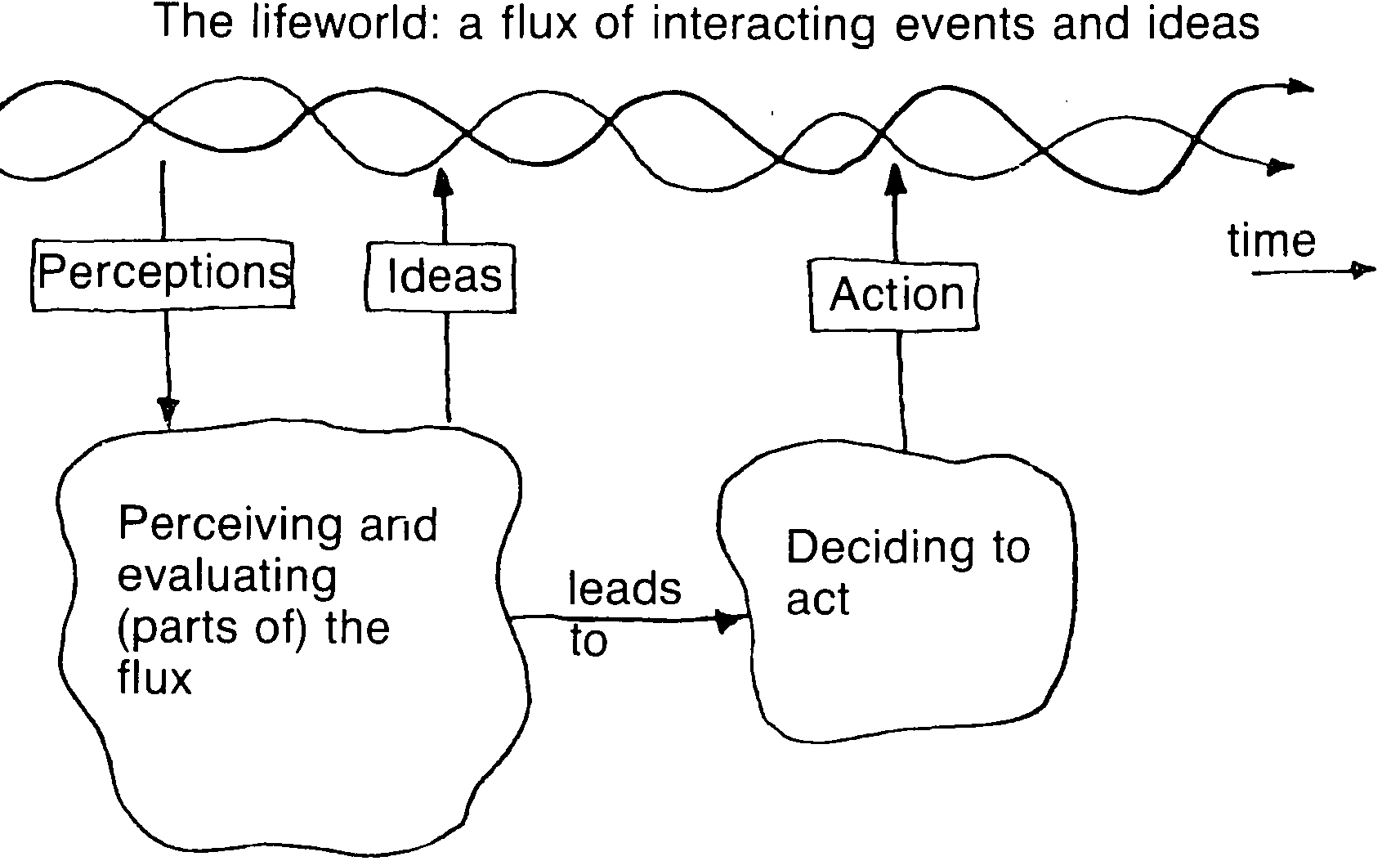
managing (Checkland and Casar, 1986) cited in Checkland 1989.”
SSM is a learning system, ensuring adaptability to diverse management contexts.10
2 Methods
2.1 Ideation: The ‘ABCD’ of Design
ABCDis an organising heuristic applied as scaffolding to develop themes and ideas of the proposed development at the heart of the study and to enable project tracking against these ideas. It divides design thinking into four areas: Assertions, Blockers, Context (and caveats), and Deferred items. The rationale behind this is that the ABCDapproach materialises design focus on the core components of the study. ABCDcan be replaced wholesale by any other tooling that accomplishes the same. The core idea is that a verifiable process exists to communicate and maintain ideation.
As a simple heuristic, it is akin to the rule of three applied to convey a narrative effectively. Dividing into two helps disseminate a complex idea, giving it shading effectively. Like a quadrant diagram, four parts can help reflect the interrelatedness dimensions. We craft design decisions from understanding these.
Alignment is the initial or central idea within this organising principle for design. Envisage that the study starts at a point of pure enquiry. From a state of Not knowing, a blank slate. Initially, there are effectively two components:
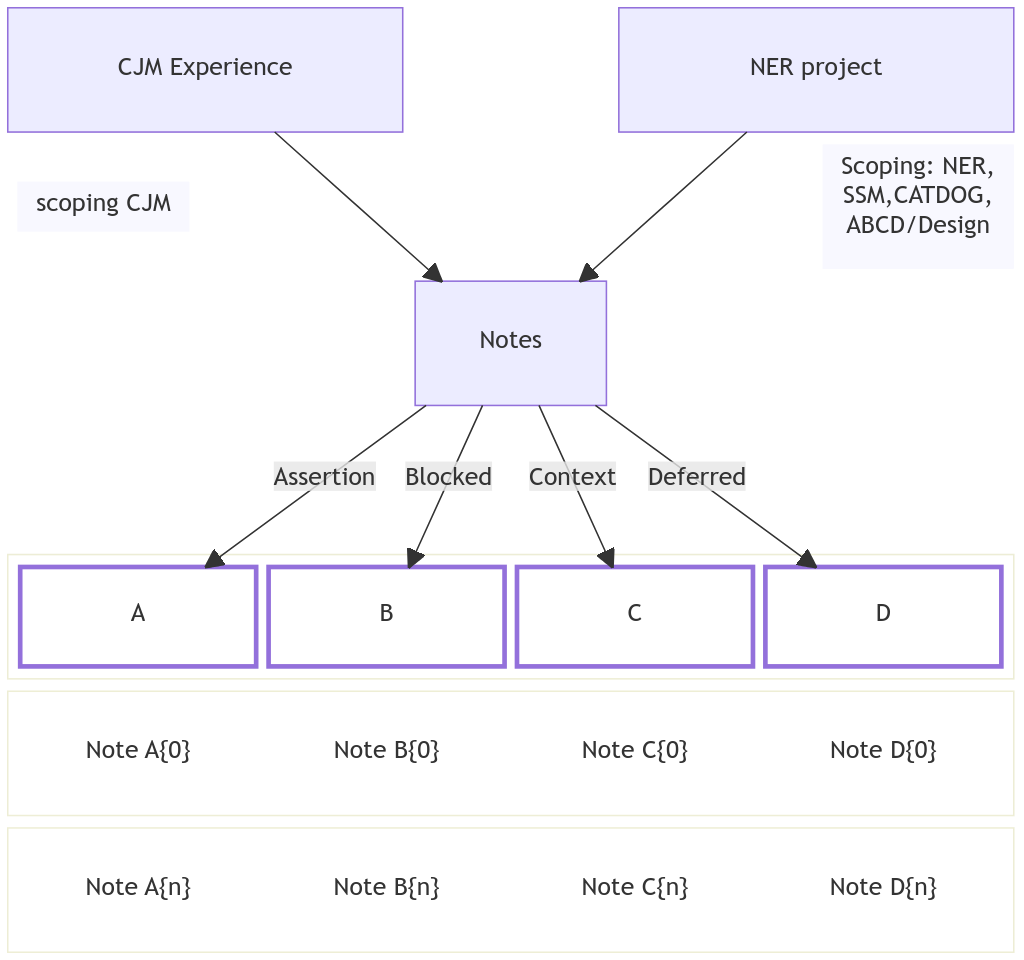
A - Assertions: Represents areas acted upon and core ideas that originated from the exploration exercises, like St.OMP or stemming from goal-setting with Goal Question Metric (GQM) and GROW (Goal, Reality, Options or Obstacles, and Way Forward). Examples of ongoing assertions included “Persona:JOBSEEKER,” “Scaling, Scoping and Goaling As Transformations,” and “Thinking About The Approach.” The proposition is that these are necessary for the project’s success. These assertions reflect a project’s core attributes in play.
B—Blockers: These represent obstacles (or TODO items) instead of deferred tasks D below. These ideas come to a natural rest, to be resumed later when sufficient resources are available and we perceive them differently. This is a design blocker that is separate from engineering parlance.
Blockers arise for different personas, such as \@ENGINEER A Blocker example is NER Searches related to automated article alerts addressed by running manual searches rather than resolving this directly. Engineering can run model categorisation on blocker documentation for report dashboards to help detect problem patterns.
Notably, If AI were used to predict ideas around Assertions, Context, and Deferred content, Blockers would constitute project parameters excluded from these results.
C - Context: Represents areas of activity for focus. In propositional terms, these are sufficient for the success of the elected use case. Every Contextual item C has one or more associated Assertion A. So, we apply reflexive logic for thinking to establish [missed] correlated assertions. Also, it is imperative to implement A, which is critical for the success of C’s implementation. Examples of contextual items categorised as contextual include “Remember the Use Case” and “Journey Advantages.” Context guides a concept, and contextual drift can occur.
For example, Persona:JOBSEEKER becomes \@SEEKER for the project context. While we apply thinking to develop ideas, its origin story can skipped. Having ABCD allows us to track the movement of ideas in terms of timing and context of what else was in the pipeline. ABCD can help identify and scaffold engineering journeys and mapping touchpoints.
Deferred (D): Refers to items that are set aside, typically as stretch goals or as part of a product roadmap. These may also arise when scoping the deliverables, project direction, and include AI-generated reports needing to be vetted and contextualised. Once the context is established, the deferred item can be marked as completed. Similarly, if stretch goals are achieved, they can provide a foundation for further development.
2.1.1 Goal Setting: Near Reach and Stretch Goals
The workflows for ABCD can help address the Stretch Goal Paradox. Sitkin, Miller and See (2017) These are resources for future iteration and deferred until the near-reach goal is identified and attained.

A successful implementation can be adopted by @ENGINEERING ABCD and extended to manage journeys for the @SEEKER who also faces an information overload navigating opportunity and goal-setting.
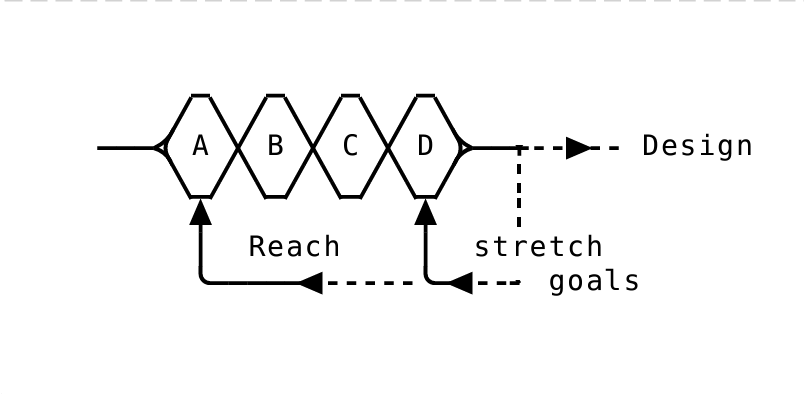
ABCD can help address the Stretch Goal Paradox with a feedback loop ensuring that resources are in place to enforce iterative goal setting, so the practitioner attempts the goal when on the right loop.
This iteration adopts Joplin an open source application for note-taking and maintaining the ABCD processes. Joplin offers a Server version and API support.
Introduces CATDOG with its basis in CATWOE, explaining why we swapped aspects out and where we redoubled efforts.
2.2 The Outline
WHAT METHODS FOR NER?
WHAT METHODS FOR SSM
WHAT METHODS FOR GOAL SETTIING and DESIGN
WHAT OF CJM?
  - Weber Theory
  - From the CJM perspective we want to X measured as Y
2.3 The Files:
-   /ABCD/images/CATDOG-CATWOE.qmd
-   /ABCD/methods/Customers.qmd
-   /ABCD/methods/Actors.qmd
-   /ABCD/methods/\_Transformations.qmd
-   /ABCD/methods/\_Domains.qmd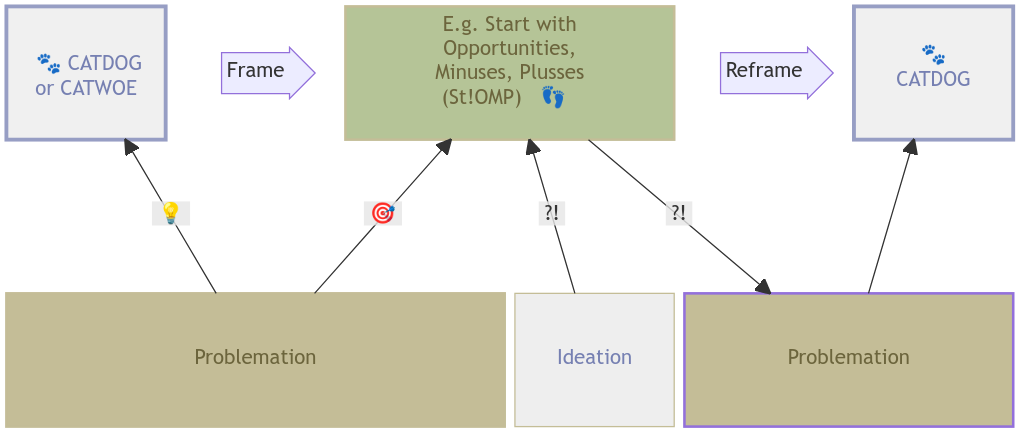
2.4 Customers
The individual(s) who benefit from the output. It is recognised that the transformation output may be negative for some customers and positive for others.11 For CATDOG, the perspective is on the benefit from the Gestalt (G) viewpoint introduced below. Additionally, we do not allow transformation on the viewpoint, and exclude transformations like,” ‘80%’ perceived the workflow as benefitial. We want 90% to perceive it so.” These are two system transformations: a system of the 80%, and a system for the 90% (to improve upon the 80%).
2.5 A is for Actors & Agency
Actor specifies who is involved in implementing the transformation proposed. 12 This applies to CATWOE and CATDOG.
2.5.1 Transformations
This is the core activity of the system, representing the change that takes place as a reult of participating or interacting with the system. It describes what the system does, transforming input into output. Defining the transformation process is fundamental to understanding the system’s purpose. Transformations are often misunderstood in this context so with CATDOG we add some clarity, stipulating that not component of CATDOG is altered by the transformation. C does not become A, D does not transform into a new D, etc. With these systems we are focused on a change of state.
2.5.2 Domains (Knowledge and Inheritance)
Domain (of Inheritance, knowledge, or other operational research area). Replacing ‘Environment’ with a focus on documenting the areas of science or endeavour from which we understand the actions. It can be populist views, peer-reviewed references, or personal beliefs based on a holistic investigation, like self-reflection. For example, the data for the domain might come from observations, surveys, or other techniques like the AEIOU heuristic, which generate observations that change over time.
The Domain captures the broader context of the relationship between Actor and Transformation, enforcing a broader ideology. It sufficiently addresses the ‘Worldview’ (W) aspect of CATWOE, although it may need frequent revisiting, for example, if the basis of our understanding (model) or data changes.
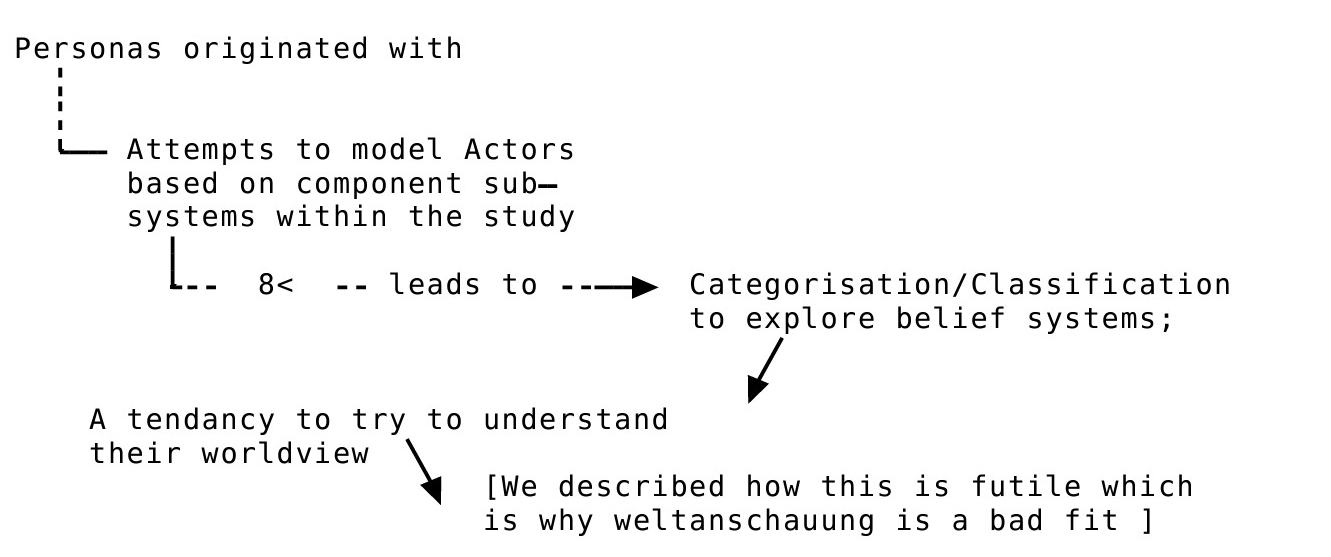
2.5.3 Why Extricate Worldview - The Weltanschauung?
Checkland (1989) describes Weltanschauung as “the stocks of images in our heads, put there by our origins, upbringing and experience of the world, which we use to make sense of the world and which normally go unquestioned.”
It can elicit some visceral responses: first, it raises red flags if we presume to leave bias unchecked. Second, effective ways to achieve better without taking a knee for ideology exist. So, third, why look back if the only action needed is to flush? It is sufficiently clear that individuals will struggle to find a productive response.
Additionally, what happens when participant-practitioners cannot access an established worldview? Several factors affect accessibility: cultural, societal bias, and financial barriers to the circles eking out that worldview. This is a gravity problem 13 an immovable circumstance for job-seekers and career changers. In contrast, worldviews offer a panacea for others, separating the haves from the have-nots in these situations. It is necessarily true that fit is an issue.
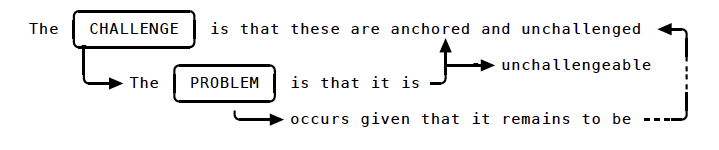
The idea of a universally accepted, communicated worldview raises questions. Yes, these exist and serve well as a bias to action that has proven effective in rallying forces. The challenge remains that worldviews stay anchored and remain unchallenged. (E.g. Figure 8). For the Employment Journey, Finding and Fitting are essential strategies. We have a third strategy in Forming. Where worldviews are invaluable, the Domain of knowledge (D) and domain inheritance are practical viewpoints on finding and fitting, respectively, in place of the Weltanschauung (W).
Notably, the third tenet of SSM Checkland (2000) (Checkland, 2001) emphasises the importance of consciously articulating the process to facilitate understanding and improved outcomes. The second tenet of SSM posits that groups and individuals act autonomously, leading to differing evaluations and actions tailored to unique perspectives. We want to leverage diversity and reframe to capitalise on emerging opportunities.
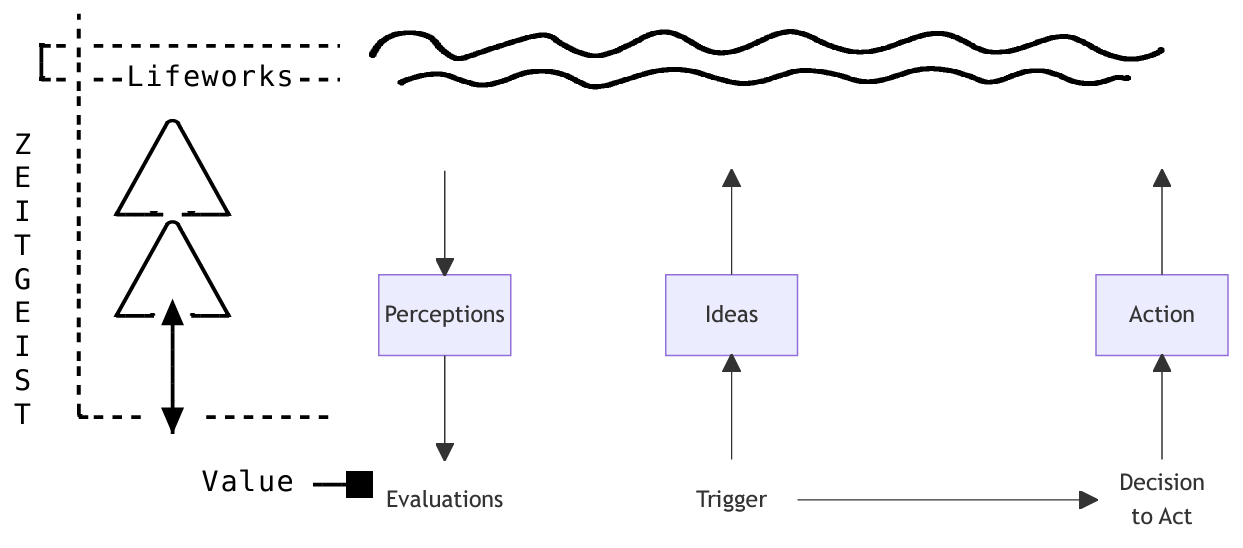
In this context, the concept of ‘zeitgeist’ is particularly relevant. The accompanying figure Figure 9 illustrates the relationship between zeitgeist (Z) and the first tenet of SSM, highlighting how current societal and cultural dynamics can influence system thinking and decision-making processes.
2.5.4 Ownership
This is the individual or group who could instigate or stop the system. They have the authority to decide whether the system is created, changed, or dissolved. Identifying the owner helps to understand who has the power to make decisions about the situation. For example the Actor A, in this context engineering, meets the Customers C needs as per the terms of the Owner O. Proximity for A to either may be critical for success. In any process where O is A and C (like this study), it is critical to be part of the zeitgeist Z. Reflecting on Gestalt G alone will not itself ensure any success.
2.5.5 Gestalt
Specifying ‘Gestalt’ as ‘Worldview’. Gestalt represents the overall feeling or the whole being greater than the sum of its parts, linked to brand experience and broken down by the Brand BIAS acronym (Behavioural, Intellectual, Affective, Sensory). The shift addresses issues with the context-specific nature of ‘Transformation’ and ‘Environment’ in CATWOE.
2.5.6 Introducing Zeitgeist
The zeitgeist (Z) applies a framing anchor for worldviews, as a cursor on shared values. Remember the first tenet, which is that SSM is a tool for the management process. (Figure: 9). We find alignment with modern trends in management thinking that promote the management function as a facilitator. Due to this pairing, any practices running counter to the relationship with the zeitgeist flags risk.
Zeitgeist offers guardrails to exclude the polarising effects of the owner or external pressure groups. Stakeholders are already covered by analysing Ownership (O). External stakeholders sit within C-A-T-O observations, respectively, and their relationship is also expressed within Gestalt (G).
Note: The study emphasises SME micro-organisations; for example, a venture capitalist might relax this rule. They might sit outside the realms of zeitgeist as defined here.
3 Exploration
Onwards, let us explore the scenario to scope the preliminary designs.
The @ENGINEERING team identifies three components of the @SEEKER workflow that can benefit from their intervention. First, there is a large volume of email subscriptions and automated alerts with relevant jobs. Second, a subscription service is used to scrape jobs and track applications, a workflow they will soon replace. Third, the system can be automated with application tracking and associated job analytics hosted on a virtual private server.
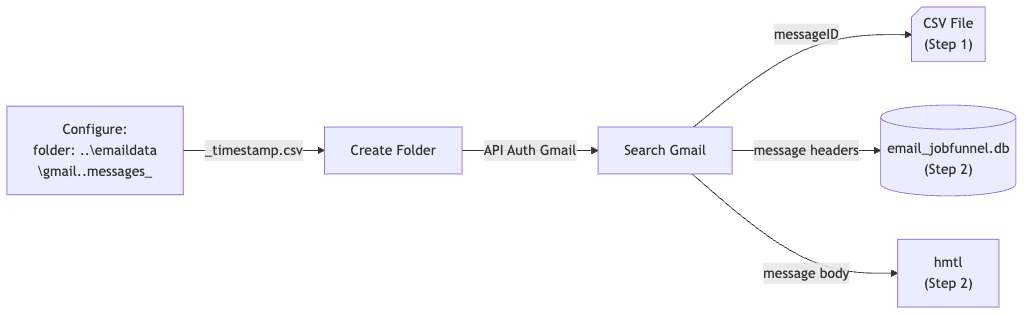
Here @ENGINEERING proposes an open-sourced solution combining a document server (Joplin Server), an on-premises content collaboration platform, NextCloud and RStudio Server. The first iteration extracts emails from a Gmail folder (see Figure 18) and scrapes these for job descriptions. Figure ?@fig-dashboard-1 below depicts a sample dashboard:
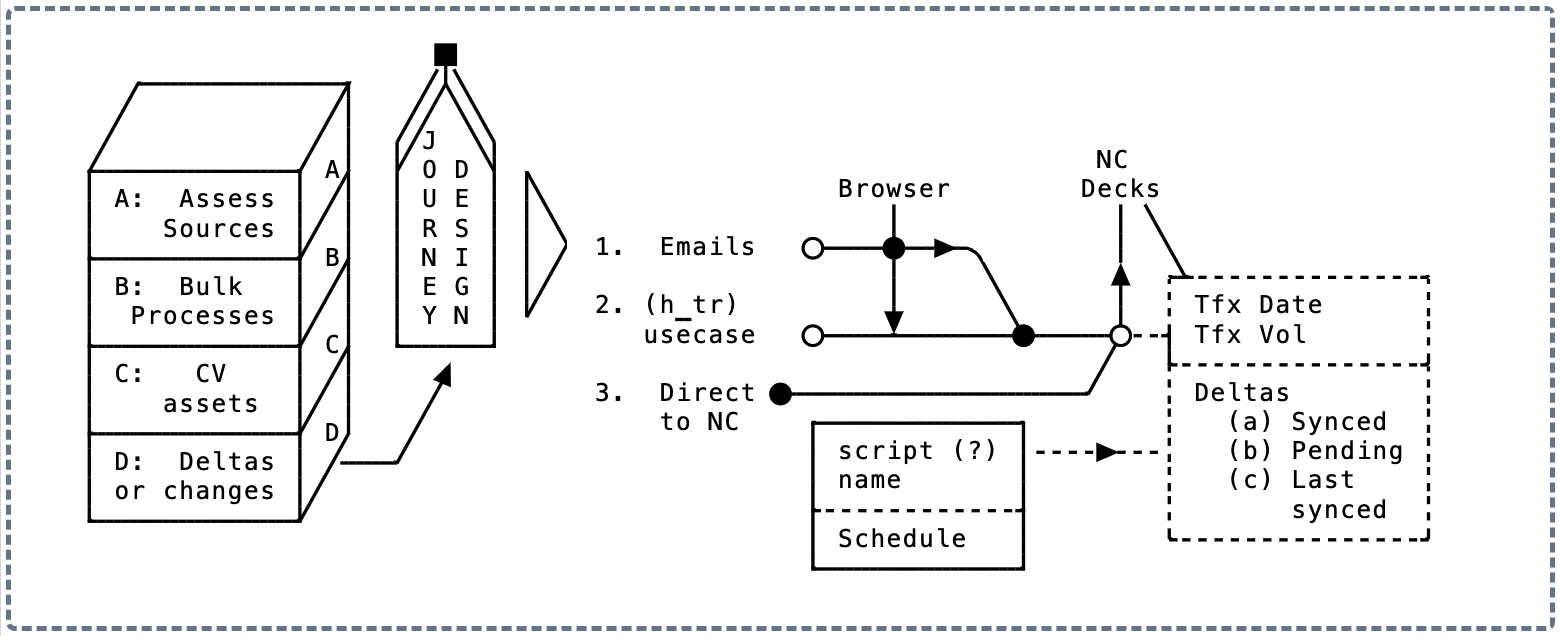
They summarised the @SEEKER workflow as: (A) Assess Sources, (B) Batch Processes, (C) Communication, Correspondence & CV, and (D) Deltas. Deltas are changes that take time to automate and need manual intervention and frequent checks.
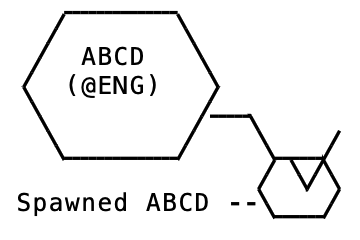
Fundamentally, code-reuse and reusability is at the heart of Engineering. @ENGINEERING expects to repeat the success of applying the ABCD heuristic, applying to their current iteration of the sub-project.
It is an opportunity to manage job-search channels, commencing with the email notifications bottleneck (high volume of inbound emails). The minuses they must address are the bottleneck from the sheer volume of these, and solve for generating insights based on stochastic metrics and provide a self-feedback loop for the @SEEKER. On a plus note, the lessons learned can be extended to the subsequent components described above.
Have we introduced the @PERSONAS and document conventions?!
3.1 An Outline Exploration Using a CATDOG
A quick overview of the exploration for this project15 follows.
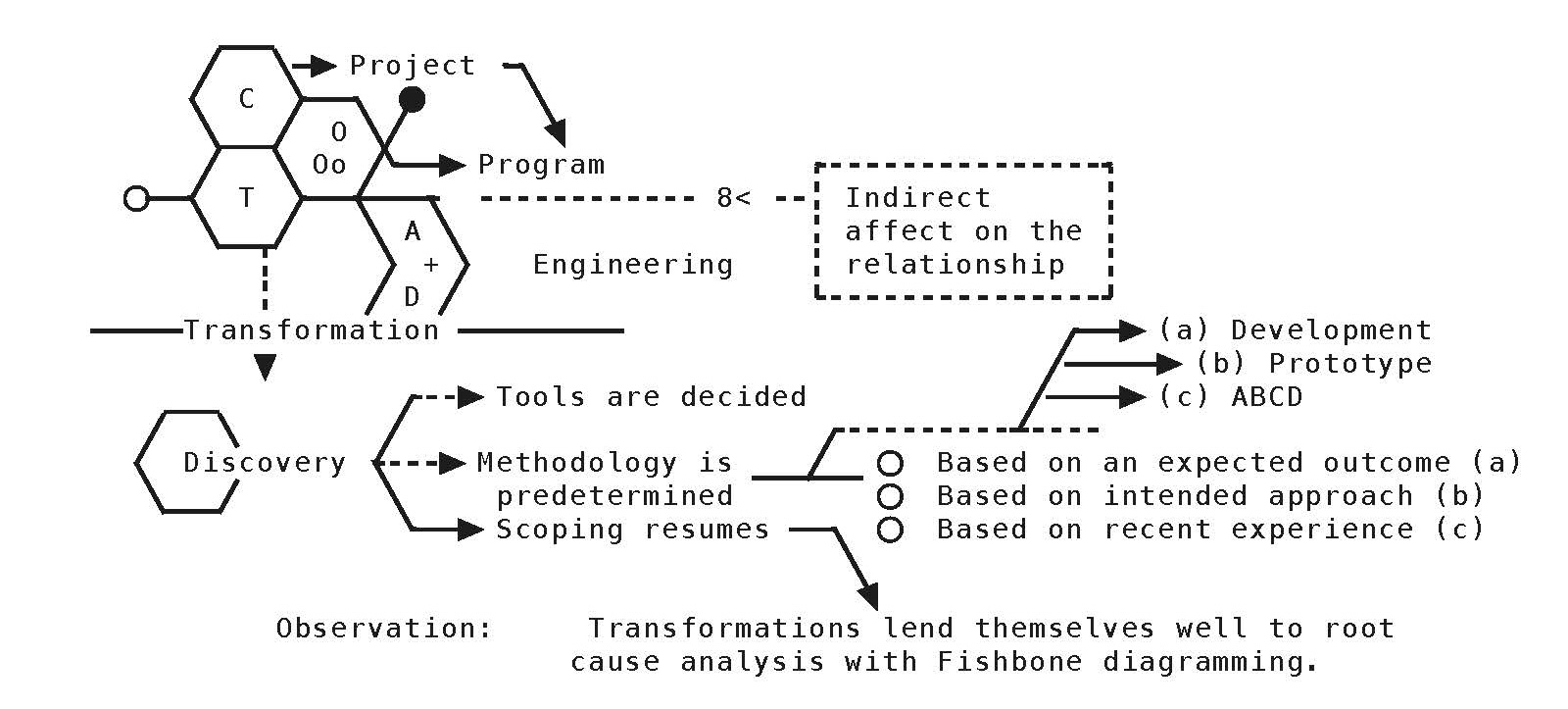
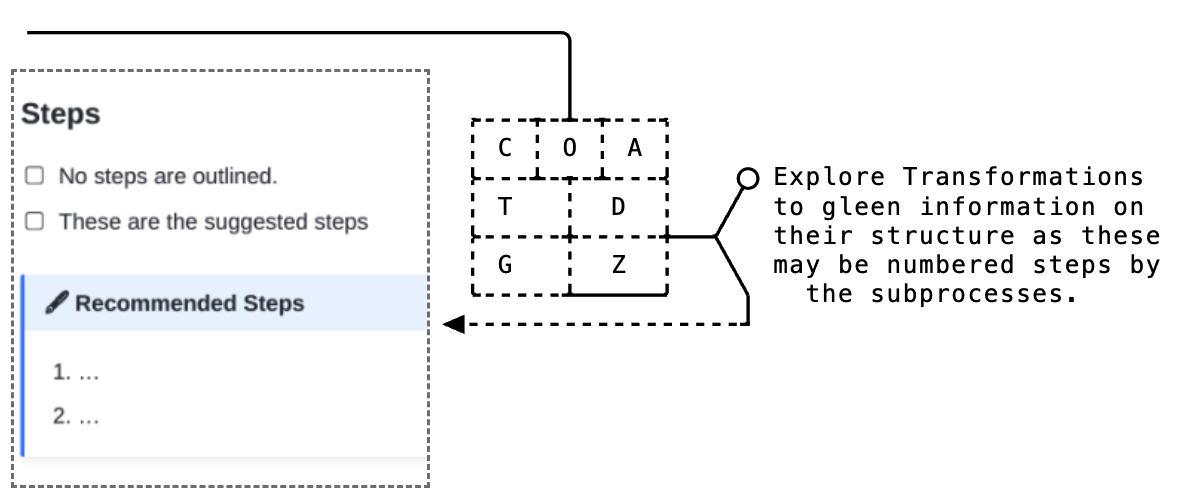
Consider the two parts, of the sketch in Figure 12 above the Transformation fold, which establishes the Engineering functions relationship to the customer @PROJECT, and the Owner @PROGRAM.
3.2 Overview: Examining the Exploration Using a CATDOG
Below this fold, observe that a Discovery process drives the underlying transformation. We soon establish that the tooling of the transformation is predetermined, with the risk that this creates a dependency or limits idea development. Any subsequent changes in tooling will affect the timelines and quality of the output.
It is imperative to set expectations upfront about the impact of changes. Alternatively, we need to retain the ability to rescope, as the premise was
Additionally, methodology was predetermined from earlier exploration and may have overspill from ongoing other projects. Overspill refers to catchall behavioural phenomena like inattentive blindness, which is the human capacity to focus narrowly on stimuli and effectively be blind to other events within the frame.
‘CATDOG’ can uncover significant risks. For this core discovery exercise, @ENGINEERING works with @PROJECT rather than directly with @PROGRAM. Consequently, a risk that the solutions delivered by this transformation will be over-engineered. The project team must be specific about the nature and timing of deliverables; agile practices may reduce the risk over iterations.
As with any learning activity, this is an ongoing process that engineers will iterate upon over their professional careers. One valuable lesson here is the risk surrounding methodology. The solutions require extra resources or expertise. Hence, there are budgeting and cost management pressures. These are PROJECT costs in this operational model.
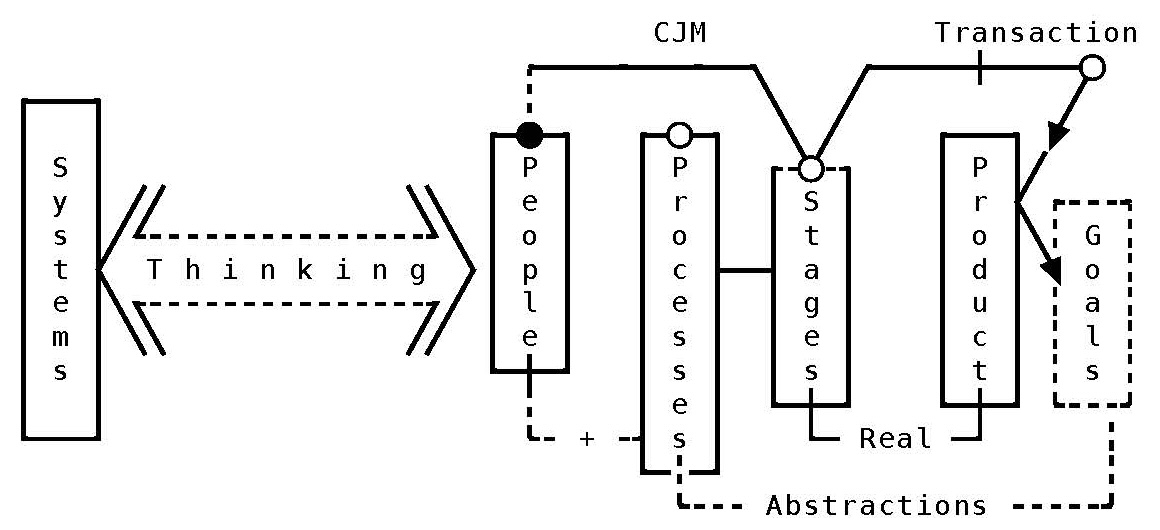
The study mimics real-world enquiries by presenting a multi-layered investigation into the complex relationships between the components of the problem scenario and the goal-focused client interventions that Engineering teams work on to develop opportunities.
As Figure 13 depicts, we apply systems thinking to the people (e.g., Customers, Actors, Owners), and the underlying transformation processes, and stages. These stages are touchpoints calling for human intervention.
:::
3.3 @SEEKER: Service Providers Fallacy
Professional networking sites16 are essential for building business relationships. They offer premium tiered services and AI-enhanced analytics on companies and profile visits. However, specific challenges arise when applying these features to the context of job search. The base rate of active job searching for an individual is lower than for users generating bulk sales and high-monetary-return business contacts. This indicates that frequentist approaches are unsuitable; individuals tend to look for jobs far less frequently than the rapid changes in the job market.
This base rate improves when a job search is a mainstay practice. The Employment journey concept helps centre-frame job searching. Maintaining this perspective helps support their sense of agency self-manifested in proactive professional development planning (PDP). They actively identify skill gaps, seek training, and strategically build a network. By definition, this reframing promotes self-efficacy. The belief in their ability to identify opportunities helps cultivate a mindset that positions them as competent candidates.
The chances of quickly finding a job within days or weeks are generally low due to market competition and hiring timelines. Engaging marketing like Figure 15 or an anecdotal “My associate used Premium and got hired!” stands in stark contrast to the indicative low base rates leading to a cognitive error known as the base rate fallacy, a cognitive error as the probability space is masked by generalisation.
Alternatively, consider the job-seeker with a long-term goal of being self-employed or inviting engineering contract work. At the cost of an annual subscription that amounts to a few days of earnings is a fair risk, as a subscription improves the chances of self-employment. Had they cancelled the subscription earlier, such opportunities would have been excluded.
In today’s job market, seekers face an increasingly complex landscape that, while enhanced by AI, lacks a unified approach. Meanwhile, we find that high levels of networking or job search self-efficacy compensate for low levels of any other resource and improve job search intensity, leading to interviews. 18
To compound this lack of directional support in services targeted at job-seekers, today’s candidates contend with a significantly convoluted paradigm that introduces considerable noise into their efforts to secure gainful employment: An imperative to craft targeted resumes capable of bypassing electronic vetting (by ATS - application tracking systems) is complicated by the prevalence of ghost job postings by legitimate companies19 and the documented risk of data harvesting for training AI or scams and phishing.20 21 Further obscuring the path are organisational practices such as filling roles internally while still posting listings.
These inch away from the base rate of success, rather than accumulate as a cohesive whole, and although generally the more resources the better, it is nuanced(Veiga et al., 2024). An underlying opportunity cost issue emerges when maximising returns for efforts. Aligning with Conservation of Resources (COR) theory, the financial outlays are more stressful than any equivalent gain from building agency and self-efficacy. Journey mapping focuses on the R in COR - “objects, personal characteristics, conditions, and energies that are valued by the individual” 22 for goal accomplishment. 23
Journey mapping has compounded value for the @SEEKER given the necessity for continuous skilling and reskilling in a highly competitive market (UK averaging x2 seekers per advertised role)24 (reflected by Figure 16), compared to reliance on external, fragmented AI-based solutions, where poor data governance blurs the lines between customer (C) and owner (O), where customer is a data abstraction, and the customer (C) and the AI domain (D).
CIPD figures show an expected decrease in staffing within the UK private sector, with 25% planning redundancies, “the highest level in a decade outside the pandemic.”, and 12% reduced hiring. 40% expect a rise in existing staffing costs.
In a saturated market, where job-seekers outstrip demand,25 while it is suboptimal to take any job, @SEEKER can look for well-designed roles that break the cycle of waiting for well-matched roles. 26 Note: this study blends research and design assumptions to develop the @SEEKER persona, making no assumptions about the specific circumstances of the seeker.
3.4 Editorial notes
- image location: Joplin Email Transformation Steps

3.5 Journey Mapping in Context
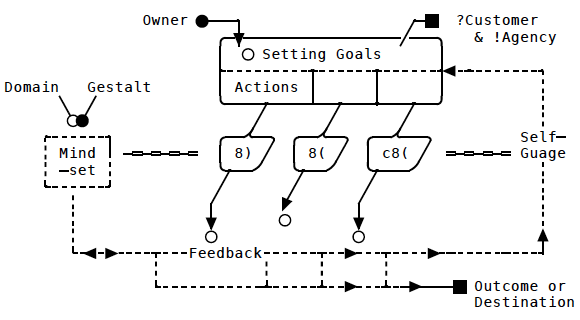
This study adopts the Customer Journey Mapping (CJM) convention, which depicts steps towards a goal, as described by Gibbons (2018).
Emails are picked from the (SEEKER?) Gmail account, and tracked:
3.6 Editorial notes
- image location: Joplin Email Transformation Steps
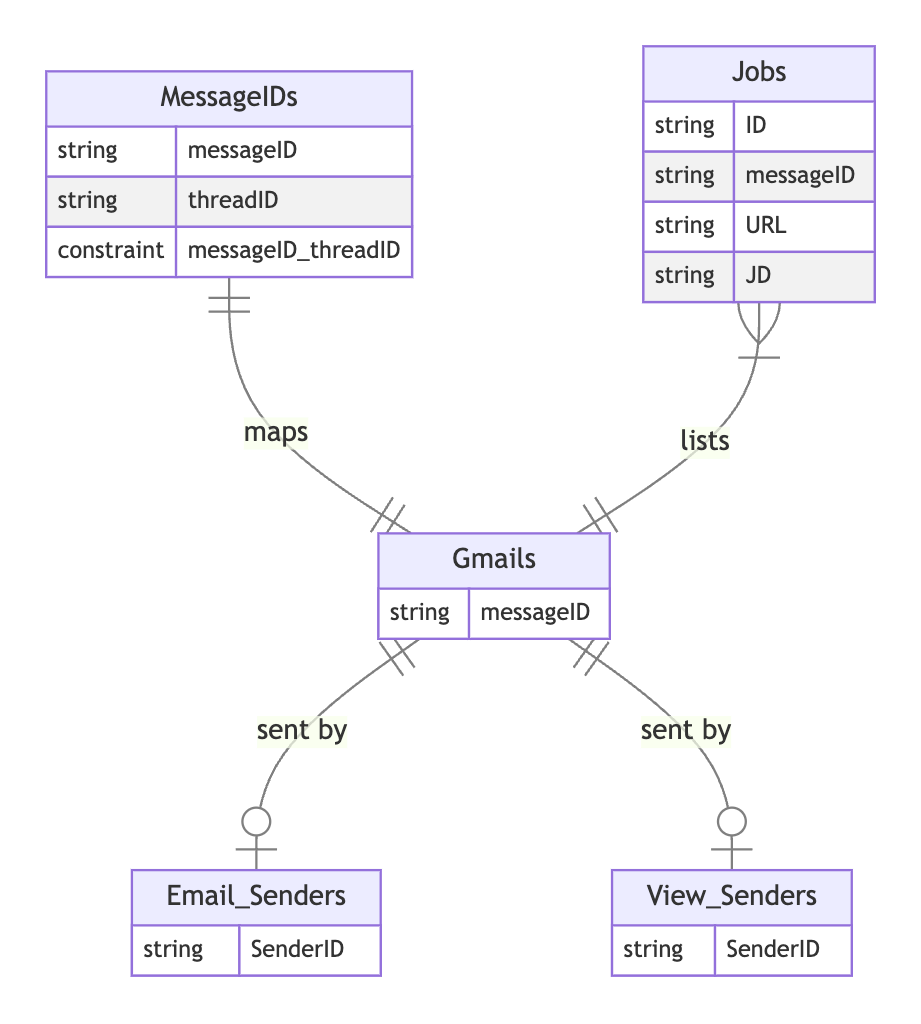
The target database configuration for this phase:
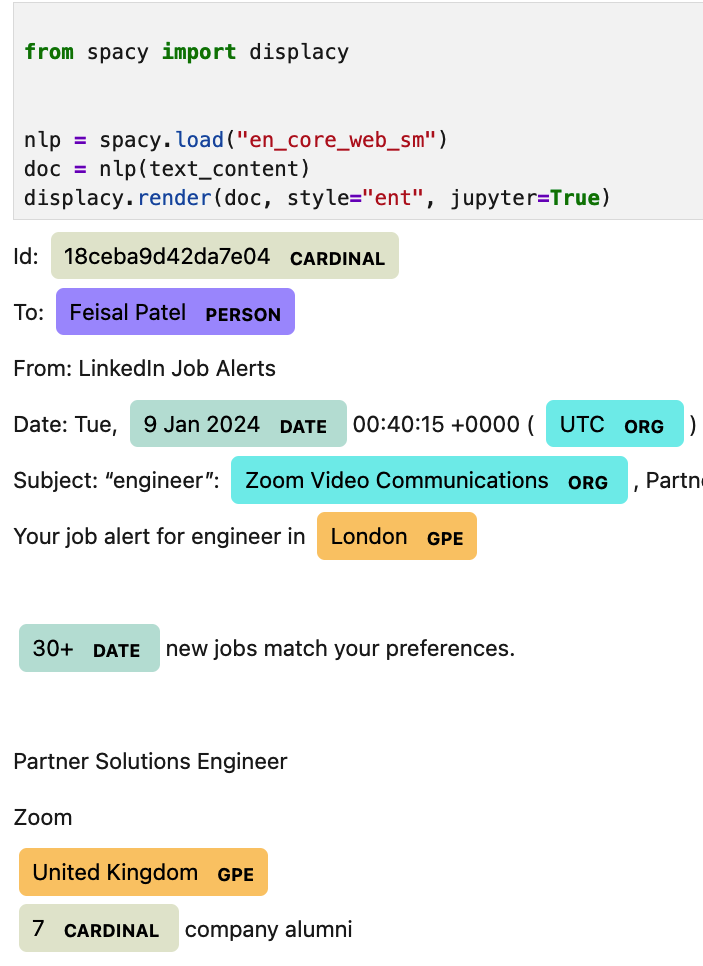
Although spaCy does not ship with Job Title or Skills entity recognition, we can see it performs exceptionally well at detecting people, organisations and numbers.
Fundamentally, code-reuse and reusability is at the heart of Engineering. @ENGINEERING expects to repeat the success of applying the ABCD heuristic, applying to their current iteration of the sub-project.
4 Conclusions
4.1 Determine an Engineering Focus
- /ABCD/conclusions/images/_img_determine-engineering-focus.png
Below is a simple model of the challenge overview; please see Figure 22 below.
To the left, we plan and focus on problemation. To the right, we explore solutions through the lens of ideation. We assessed that heuristics and tools like St!OMP and CATDOG are essential for this transformation. The word transformation in context is better understood as a journey.
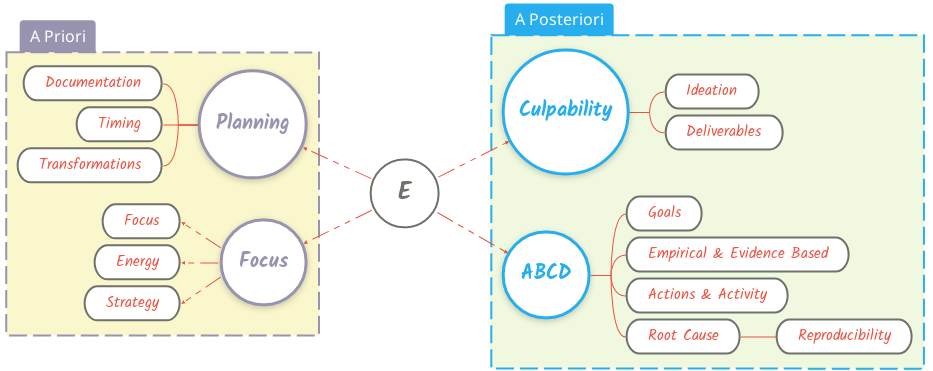
Although each project may have different initialising success factors, it stands to reason that to establish the Engineering focus, we need to understand the risks and opportunities realistically by approaching this through probabilistic means.
In our current invocation of the employment journey, we have formulated three key strategies: Finding, Fitting and Forming. 27 These categories originated through observations made while actively “looking for work”. Their genesis is not from a text or isolated reflection. Instead, they are born of a conversation with a career coaching expert 28, resulting from expert thinking processes. Extending this idea of genesis, with any practice in prototyping and proof-of-concept, the goal is to build expertise. Then, applying expert thinking, we have demonstrative evidence.
…Test positioning…
Editor Note:
_determine-engineering-focus.qmd
4.2 Determine an Engineering Focus
- /ABCD/conclusions/images/_img_determine-engineering-focus.png
Below is a simple model of the challenge overview; please see Figure 22 below.
To the left, we plan and focus on problemation. To the right, we explore solutions through the lens of ideation. We assessed that heuristics and tools like St!OMP and CATDOG are essential for this transformation. The word transformation in context is better understood as a journey.
Although each project may have different initialising success factors, it stands to reason that to establish the Engineering focus, we need to understand the risks and opportunities realistically by approaching this through probabilistic means.
In our current invocation of the employment journey, we have formulated three key strategies: Finding, Fitting and Forming. 29 These categories originated through observations made while actively “looking for work”. Their genesis is not from a text or isolated reflection. Instead, they are born of a conversation with a career coaching expert 30, resulting from expert thinking processes. Extending this idea of genesis, with any practice in prototyping and proof-of-concept, the goal is to build expertise. Then, applying expert thinking, we have demonstrative evidence.
_CJM-changing-winds.qmd
_CJM-changing-winds.qmd
“A study that sets sail to explore a more traditional Customer Journey Mapping (CJM) with the same focus on New Product Development and Named Entity Recognition (NER) very quickly runs aground. Fortunately, it does so barely out of the harbour.”
This narrative says nothing of the chances of success for subsequent journeys. Empirically, a failure, even early on, has ramifications for the future. Professional journeys do not just end there, hopefully. However, it seems almost fortunate to be in a position to resume a project after it fails initially. Then again, the adage “LUCK is Labouring Under Controlled Knowledge” most likely applies here.
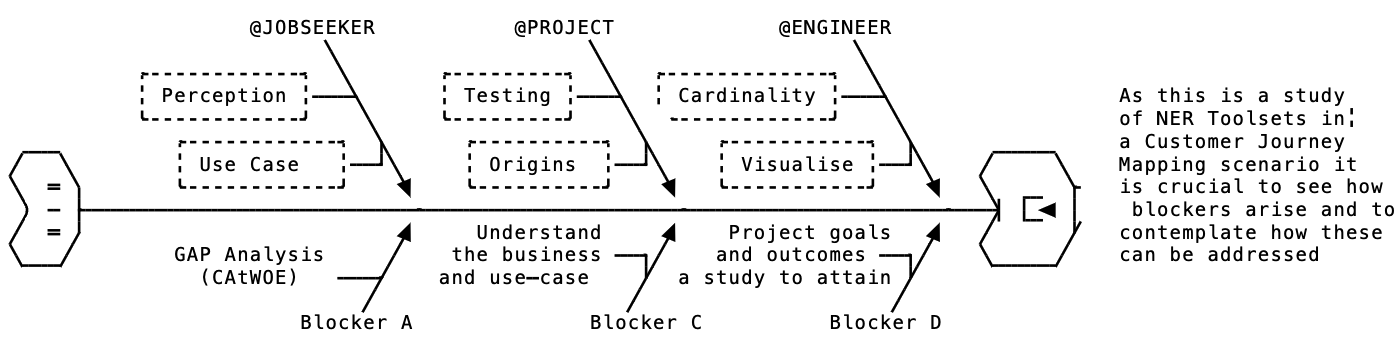
Evidence from this study shows that the risk factors for failure were identified. This circumstance did occur, and the project experienced the consequences of the aforementioned risk. The Figure 24 depicts a fishbone diagram exploring Blockers in the context of Assertions, Context and Deferred items
Analysing ABCD, we expect this general alignment, and so we can enforce quality by establishing tests of correlation (as a stretch goal for future iterations).

Note: As a stretch goal for future iterations….
can resume by navigating the changes arising due to concerns that caused it to falter.
However, The probability of success does not change because of what we do next; this depicts the sweet spot of Customer Journey Mapping (CJM). We walk away from a gravity problem and return when better resourced. We assume risk based on known principles a priori and walk away a posteriori. The ability to return indicates that a past attempt accurately captured risk. Doing something twice does not make us more successful, and is expanded upon below.
Consider then our definition of success. CATDOG premises that the target systems do not change any C-A-T-D-O-G dimension. “The system does not make me (succeed).” It can raise the chance of personal or professional success. It can serve to punish (judiciary). Subsequently, systems cannot fail people in the same sense we say, “The system failed us!” In this event, CATDOG supports cognitive reframing.
Also, CATDOG trains focus on the outcomes of the group’s beliefs (in Gestalt) and outer or external constraints (as zeitgeist). Systems exist to support a worldview; are these closed systems with restricted access or closed-looped with open feedback? Journey Mapping leans on the second, asking for feedback, and this feedback is often visible.
CATDOG is an iterative process. It links the ‘interconnectedness of ideation’ and the interconnectedness of systems by ideation. Journey Mapping (JM), we posit, measures the clarity of ideation. JM disregards everything outside the system’s periphery and measures a system step in isolation, i.e. excluding other systems in these aspects that call for human attention.
An example of interconnectedness was the `ABCD of Design`, which appeared in 22 documents (notes and project updates). Google’s Notebook LM platform helped build a narrative from these. Additionally, the AI built a near-precise description of the entire study’s key points with access to just the notes that reference or reflect on ABCD. Audio will be available on the associated website.
4.2.1 Doing something twice does not make us any more successful.
We view the rise of AI through the perspective of how database technology became accessible as computing costs decreased, processing power improved, and the gap in training resources narrowed. Small businesses began developing systems in-house, creating new opportunities. Should we anticipate similar developments, considering the high availability and widespread nature of AI, machine learning (ML), and natural language processing (NLP) solutions? If so, why?
4.2.2 On Finding, Fitting, and Forming
This heuristic, taken from the context of the employment journey, applies. It highlights a problem: these might be 3 distinct steps or stages. Named Entity Recognition (NER) is an excellent fit for the first:
Finding skill tokens that match our skill set.
Matching our CV to a job description.
Improving our search parameters.
NER can help determine the gaps. However, it takes action to fill them and ensure a Fit.
Logically, after establishing a match, we might correlate for fit. Similarly, we need a clear picture of our current skills and estimated business needs to Form a projection. Data on national and global skills gaps and shortages only relate to Fitting. Consequently, any data on changing course midway is always unreliable. Staying in your lane is the pragmatic approach. So on to building the journey first find, then fit, and last form. Journey mapping should encompass these in turn.
4.2.3 The original scoping of the project was complex.
Adopting the ABCD process clarified near-reach goals versus stretch goals. ABCD also offered insight into interpreting the value of reproducibility and observability from a design standpoint. Reproducibility holds that the past premises hold in the context of the current development cycle.
_ABCD-in-GEAR.qmd
4.3 ABCDs: Designing Employment Journey Mapping
Where ABCD is a placegolder metaphor for the ideation process, reflecting on ABCD we have four aspects (spelling GEAR, to aid recall):
Goal setting,
Empiricism of research (or Evidence-based),
Action planning,
Root cause analysis.
GEAR - Areas of Transformation.
The transformation for ideation (having identified the opportunity) is intentionally grouping a design into focus areas around action points to address these GEAR based on research and learning. These four transformations occur through ABCD workflows. Therefore, these are sufficient and necessary goals for Employment Journey mapping exercises.
Stretch goal: This outlook can be extended to make inferences on Employee journey mapping, and reminiscent of the US Fedral Goals-Engagement-Accountability Results (GEAR) framework.
Key themes and activities within this project include researching and applying NER, exploring journey mapping techniques, developing a business use case, and focusing on concepts like reproducibility, cognitive reframing, tacit knowledge and learning, and systems methodologies like SSM, CATWOE, and CATDOG.
4.4 A Note on Systems Modelling
We present systems as box-like within a finite physical space. The box scales up as a room with people producing items and processes. The room has hinged windows that, when opened, reveal a static picture of the world. That static picture, in a business sense, is the customer abstraction; in the engineering sense, this abstraction is a persona. This abstraction may be a large language model for machine learning.
Whether a systems intervention is Hard or Soft, systems coexist outside the imagination. Although engineers mould design-decisions around abstraction layers, they still have a tangible impact regarding people-process resources (financial cost) and product-service transformations (opportunity cost). There is an interconnectedness between systems. Senge (2016)
4.4.1 Every transformation or journey step acknowledges a real-world impact.
Systems design choices have a real impact. Tools like CATDOG analysis offer a route to understand, reframe and resume. In the context of an Employment journey, finding, fitting and forming respectively. It helps uncover why we participate and where (as Customer, Owner, Actor-agent and combinations) and how. Consider the Gestalt; there may be several approaches. Acting on anchored beliefs in the context of our agency, and differentiating these from gravity problems.
Systems often present areas for professional learning and achievement, as an aspect of group endeavour. Systems enable a state transition or change within which their underlying transformation occurs. (In soft systems, transformations consider human interventions). We stress that CATDOG explicitly excludes a transformation on any system’s parts. The system transforms neither Customer, Agency, Domain, Owner, nor Gestalt. No assumptions are made about the zeitgeist as this is intangible and without scope.
We conclude that system change comes from within the system (Senge, P.,2023), which we assert stems from changes in our analysis of the parts, and motivation and successes may be affected by the zeitgeist.
Customer (C) changes arise from the perceived accessibility of new technology. Actor (A) changes are indirectly affected by many factors, including breakthrough technologies like the pervasive impact of Artificial Intelligence (AI), causing organisational drifts in staffing and governance, and focusing on delivering tangible value beyond the hype. (Gemini, 2025) Transformation (T) changes occur within resourcing. Domain of knowledge (D) can pull at a business’s marketing mix (Product, Platforms, People, Place, Pricing) choice. Ownership changes will affect decisions around resourcing levels. Gestalt suggests that the future success of a system relies on past performance.
4.4.2 Conclusions on SSM
This is a Placeholder
Consider each of the (5) tenets of SSM that Checkland (2001) describes:
- SSM is a process of management and process management.
- SSM assumes that individuals and groups are autonomous, leading to different evaluations and actions.
- Consciously articulating the process will be helpful.
- Any logically linked set of activities constitutes a whole human activity system.
- SSM learns by comparing pure models of purposeful activity with perceptions of what is going on in a real-world scenario.
Exploring the Transformations as a state transfer suggests that this is not a clear translation of transformation.
For this project, we placed guardrails around how we operate under Z (zeitgeist).
5 References
AEIOU Observation Framework (no date) Open Practice Library. Available at: https://openpracticelibrary.com/practice/aeiou-observation-framework/ (Accessed: 26 October 2024).
Beck, K., et al. (2001) The Agile Manifesto. Agile Alliance. http://agilemanifesto.org/
“BEIS small and medium enterprises (SMEs) action plan: 2022 to 2025 (accessible webpage)” (2023) GOV.UK. https://www.gov.uk/government/publications/beis-small-and-medium-enterprises-sme-action-plan-2022-to-2025/beis-small-and-medium-enterprises-smes-action-plan-2022-to-2025-accessible-webpage.
Burge, S. (2015) “An overview of the soft systems methodology,” System Thinking: Approaches and Methodologies, p. 114.
Burnett, B. and Evans, D. (2016) Designing Your Life: How to Build a Well-Lived, Joyful Life. Knopf.
Checkland, P. (2001) ‘Soft systems methodology.’, Encyclopedia of Operations Research & Management Science, pp. 766–770.
Checkland, P. and Scholes, J., 1999. Soft systems methodology in action. John Wiley & Sons.
Checkland, P. B. (1989). Soft Systems Methodology*. Human Systems Management, 8(4), 273-289. https://doi.org/10.3233/HSM-1989-8405 (Original work published 1989)
Cherry, K., 2024. How Self Efficacy Helps You Achieve Your Goals [WWW Document]. Verywell Mind. URL https://www.verywellmind.com/what-is-self-efficacy-2795954 (accessed 4.13.25).
deBono, E., 1994. PMI lesson plan [WWW Document]. deBono. URL https://www.debono.com/de-bono-thinking-lessons-1/1.-pmi-lesson-plan (accessed 4.14.25).
deBono, E., Teaching Creative Thinking 4 [WWW Document], n.d. deBono URL https://www.debono.com/teaching-creative-thinking-2 (accessed 4.29.25).
deBono, E., Teaching Creative Thinking 4 [WWW Document], n.d. deBono URL https://www.debono.com/teaching-creative-thinking-4 (accessed 4.16.25).
Definition of ZEITGEIST (2025) Merriam-Webster. Available at: https://www.merriam-webster.com/dictionary/zeitgeist (Accessed: 15 April 2025).
Ferriss, T., Why you should define your fears instead of your goals, 2017. , TEDx Vancouver. TED.
Harvey, J.B., 1988. The Abilene paradox: The management of agreement. Organizational Dynamics 17, 17–43.
Kaiser, J., Buciuman, M., Gigl, S., Gentsch, A. and Schütz-Bosbach, S. (2021) “The Interplay Between Affective Processing and Sense of Agency During Action Regulation: A Review,” Frontiers in Psychology, 12, p. 716220. Available at: https://doi.org/10.3389/fpsyg.2021.716220.
Mack, A. (2003). Inattentional Blindness: Looking Without Seeing. Current Directions in Psychological Science, 12(5), 180-184. https://doi.org/10.1111/1467-8721.01256 (Original work published 2003)
Mair, V., 2009. Crisis Does NOT Equal Danger Plus Opportunity [WWW Document]. URL https://pinyin.info/chinese/crisis.html (accessed 4.16.25).
Order of the Engineer, 2019. URL https://order-of-the-engineer.org/ (accessed 4.16.25).
Senge, P. (2016) “Systems thinking in a digital world.” Available at: https://www.youtube.com/watch?v=Zs3ML5ZJ_QY.
‘What is CATWOE, and what does it do?’ (no date) FutureLearn. Available at: https://www.futurelearn.com/info/blog (Accessed: 21 April 2025).
What is LinkedIn and how can I use it? (no date) LinkedIn Help. Available at: https://www.linkedin.com/help/linkedin/answer/a548441/what-is-linkedin-and-how-can-i-use-it-?lang=en (Accessed: 26 April 2025).
Wikipedia Contributors (2025). Agency (psychology). Wikipedia.
Wrigley, T. (2020) ‘Answer to “Definition of”agent“?”’, Philosophy StackExchange.
The Calling of an Engineer, 2024. The Calling of an Engineer. URL https://ironring.ca/home-en/ (accessed 4.16.25).
Sitkin, S., Miller, C., See, K., 2017. The Stretch Goal Paradox. Harvard Business Review Feb 2017.
Stitt, R., 2023. Crisis as Danger and Opportunity | Psychology Today [WWW Document]. Psychology Today. URL https://www.psychologytoday.com/us/blog/walking-in-wisdom/202311/crisis-as-danger-and-opportunity (accessed 4.16.25).
5.0.1 References on @JOBSEEKER
Bish, A., Hannett, J. and Irving, F. (2024) ‘Fake Jobs: Scammers impersonate firms to target victims’, BBC News, 12 March. Available at: https://www.bbc.com/news/uk-england-surrey-68110626 (Accessed: 26 April 2025).
Earl, J., Iskandar, F. and Elizondo, F. (2019), Take a Job, Any Job: Exploring the Importance of Matched Interests to Career Paths and Work Satisfaction. Journal of Employment Counseling, 56: 33-45. https://doi.org/10.1002/joec.12101
McCulloch, A. (2024) ‘UK jobs market at its tightest for three years’, Personnel Today, 29 September. Available at: https://www.personneltoday.com/hr/uk-jobs-market-at-its-tightest-for-three-years/ (Accessed: 27 April 2025).
Rodriguez, O. (2024) LinkedIn verifications, LinkedIn. Available at: https://www.linkedin.com/posts/orodriguez_im-excited-to-share-a-new-feature-to-help-activity-7239759193556029440-S_qq/?trk=li_namer_FY25JobSeekerH2_linkedin_CommunityManagement (Accessed: 26 April 2025).
Thapa, A. (2024) Ghost jobs: What the rise in fake job listings says about the current job market, CNBC. Available at: https://www.cnbc.com/2024/08/22/ghost-jobs-why-fake-job-listings-are-on-the-rise.html (Accessed: 26 April 2025).
Veiga, S. et al. (2024) ‘Contextual and personal resources in unemployed job search: An intra-individual perspective’, Applied Psychology, 74, pp. 1–24. Available at: https://doi.org/10.1111/apps.12540.
What is LinkedIn? (and how can I use it) (2023) LinkedIn Help. Available at: https://www.linkedin.com/help/linkedin/answer/a548441/what-is-linkedin-and-how-can-i-use-it-?lang=en (Accessed: 26 April 2025).
References on Thinking & Ideation
Patel, F. (2022) “Personal reflection. Software engineering with a group project (assessment 2).”
Goffin, K. and Koners, U. (2011) “Tacit Knowledge, Lessons Learnt, and New Product Development,” Journal of Product Innovation Management, 28(2), pp. 300–318. Available at: https://doi.org/10.1111/j.1540-5885.2010.00798.x.
Gupta, D. (2023) “6 Levels of Bloom’s Taxonomy, Explained (+Examples) - Whatfix,” The Whatfix Blog Drive Digital Adoption.
Sternberg, R.J., Berlyne, D.E. and Vinacke, W.E. (2025) Thought - Analytical, Creative, Critical, Britannica. https://www.britannica.com/topic/thought/Types-of-thinking. Available at: https://www.britannica.com/topic/thought/Types-of-thinking (Accessed: February 27, 2025).
Wagner, R.K. and Sternberg, R.J. (1984) “Alternative Conceptions of Intelligence and Their Implications for Education,” Review of Educational Research, 54(2), pp. 179–223. Available at: https://doi.org/10.3102/00346543054002179.
What Is Observability? | IBM (2024). https://www.ibm.com/think/topics/observability. Available at: https://www.ibm.com/think/topics/observability (Accessed: April 21, 2025).
5.0.2 Bibliography
These tools deploy Artificial Intelligence and were used to document the project.
5.1 Inspirations for ABCD of Design
Patel, F. (2022). “IxD Case Study - User Interaction Design”. CSC-40078: User Interaction Design; Keele University. Unpublished Assignment.
Wikipedia, Positive psychology. 2022. Wikipedia: Wikipedia.
Wikipedia, 2022. The Magical Number Seven, Plus or Minus Two. Wikipedia: Wikipedia.
Wikipedia, Kanban. (2022, July 24). In Wikipedia. https://en.wikipedia.org/wiki/Kanban
5.2 AI Tools
These tools deploy Artificial Intelligence and were used to document the project.
Google. (2025). Gemini AI (v1.5 Pro Deep Research 2024). [Text-based AI model]. https://gemini.google.com/
Grammarly: free AI writing assistance (2025). https://grammarly.com/
Mindomo (no date) MinDomo - Collaborative Mind Map Software. https://mindomo.com/.
5.3 R Packages
Benoit, Kenneth, Kohei Watanabe, Haiyan Wang, Paul Nulty, Adam Obeng, Stefan Müller, and Akitaka Matsuo. (2018) “quanteda: An R package for the quantitative analysis of textual data”. Journal of Open Source Software. 3(30), 774. https://doi.org/10.21105/joss.00774.
Benoi,K., Matsuo A (2023). spacyr: Wrapper to the ‘spaCy’ ‘NLP’ Library. R package version 1.3.0, https://CRAN.R-project.org/package=spacyr.
5.4 Open Source Software Used
Joplin. (2025). “note taking and to-do application”. https://joplinapp.org/
RStudio Team (2025). RStudio: Integrated Development for R. RStudio, PBC, Boston, MA URL http://www.rstudio.com/.
Zotero. (2020). Zotero [Computer software]. Corporation for Digital Scholarship. https://Zotero.org (Originally published 2006)
Footnotes
(Checkland, 2001)↩︎
Define SME↩︎
Define Customer Journey Mapping (CJM)↩︎
(Checkland, 1989)↩︎
(Checkland, 1989)↩︎
(Checkland, 1989)↩︎
(‘What is CATWOE, and what does it do?’, no date)↩︎
(Burnett and Evans, 2016)↩︎
(Definition of ZEITGEIST, 2025)↩︎
Determined through a CATDOG process!↩︎
E.g.
LinkedIn↩︎(What is LinkedIn?, 2023)↩︎
(Veiga et al., 2024)↩︎
(Thapa, 2024)↩︎
(Rodriguez, 2024; Bish et al., 2024)↩︎
(Bish et al., 2024)↩︎
(Hobfoll, 1989, p. 516 cited by Veiga et al., 2024)↩︎
(Halbesleben et al., 2014 cited by Veiga et al., 2024)↩︎
Source: Adzuna UK Job Market Report (2024) cited by McCulloch, A., 2024)↩︎
Source: Adzuna UK Job Market Report (2024) cited by McCulloch, A., 2024)↩︎
(Earl at al., 2019)↩︎
Taken as the ‘motivation’ for this study from the Employment journey↩︎
Name↩︎
Taken as the ‘motivation’ for this study from the Employment journey↩︎
Name↩︎
Citation
@online{patel](mailto:[email protected])2025,
  author = {Patel{]}(mailto:[email protected]), {[}F.},
  publisher = {unpublished},
  title = {An {Enterprising} {Use} {Case} for {Named} {Entity}
    {Recognition} {(NER)}},
  date = {2025-04-28},
  langid = {en},
  abstract = {Engineering receives ongoing criticism in publications
    {[}1{]}, both digital, and from leading enterprise consultancies. To
    understand the challenges and complexities, we take on the mantle of
    Engineering with its focus on `New Product Development (NPD)` and
    implementing an emerging technology that addresses a business use
    case for Small and Medium-sized Enterprises (SME)
    micro-organisations. Specifically, we investigate `Named Entity
    Recognition (NER)` applied to `Customer Journey Mapping (CJM)`,
    exploring Employment Journey as a design experiment to distil best
    practices. Our exploration is deeply rooted in `interconnectedness`
    that thematises the frontier of systems and technology thinking
    (Forrester, J., cited by Senge, 2016, 2:45) and in the human
    context, where systems are both a mental model and an artefact. It
    is crucial to tackle systems thinking, which is at the heart of the
    issues faced by engineering and subsequently affects other
    stakeholders. Logically, placing technology under this lens of a use
    case helps designers spot **implicit issues that impact
    implementation**. To address this, we turn to Soft Systems
    Methodology (SSM), a counterpart to Hard Systems thinking (ST). ST
    resembles a factory line with resources thrown at it. SSM employs a
    holistic approach, adapting multiple facets from various viewpoints
    and constraints. Employment Journeys (EJ) are the atomic journey of
    the industrial age. It helps frame further exploration with reuse
    and reiteration. This rehearsal helps uncover best practices and
    implement new technology, accepting that success comes from it being
    of the zeitgeist.}
}