The @ENGINEERING team identifies three components of the @SEEKER workflow that can benefit from their intervention. First, there is a large volume of email subscriptions and automated alerts with relevant jobs. Second, a subscription service is used to scrape jobs and track applications, a workflow they will soon replace. Third, the system can be automated with application tracking and associated job analytics hosted on a virtual private server.
Here @ENGINEERING proposes an open-sourced solution combining a document server (Joplin Server), an on-premises content collaboration platform, NextCloud and RStudio Server. The first iteration extracts emails from a Gmail folder (see ?@fig-gmail-flowchart) and scrapes these for job descriptions. Figure ?@fig-dashboard-1 below depicts a sample dashboard:
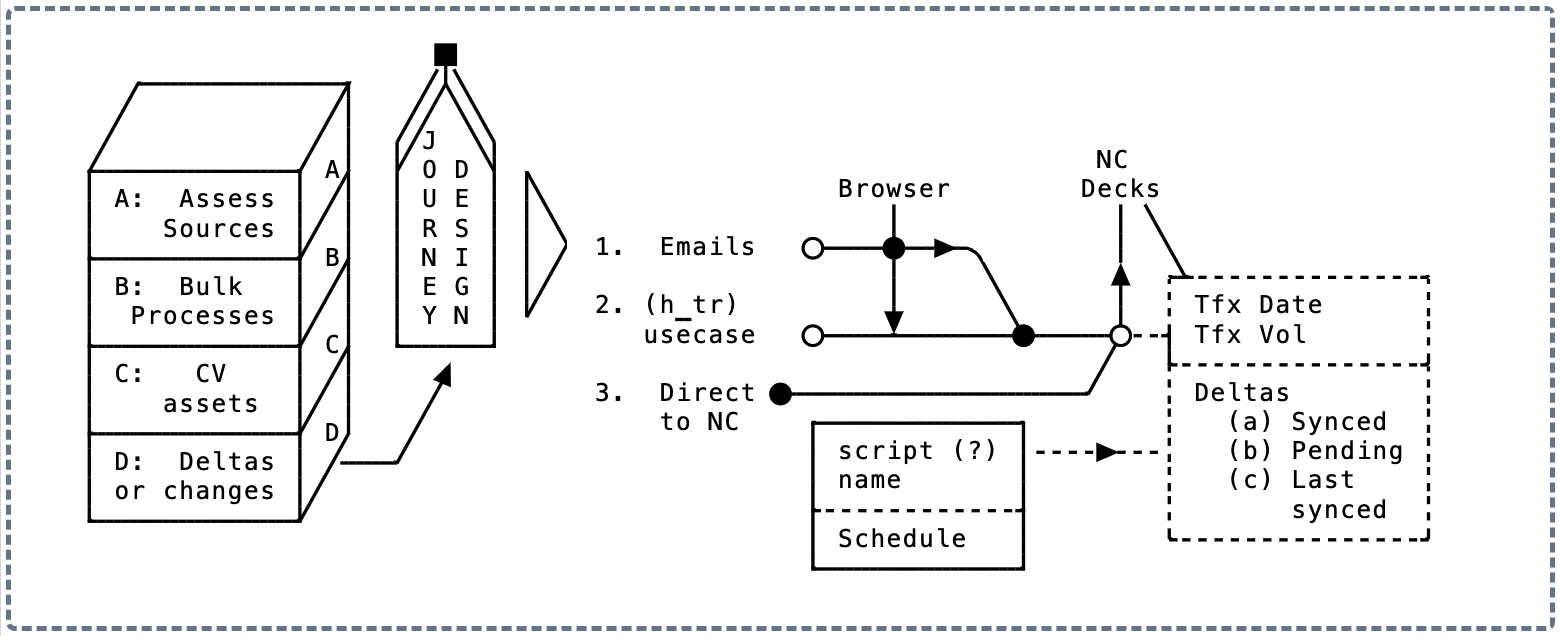
They summarised the @SEEKER workflow as: (A) Assess Sources, (B) Batch Processes, (C) Communication, Correspondence & CV, and (D) Deltas. Deltas are changes that take time to automate and need manual intervention and frequent checks.
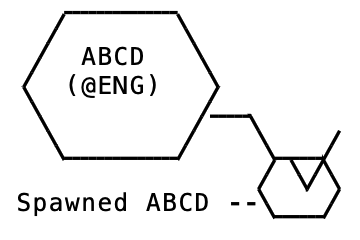
Fundamentally, code-reuse and reusability is at the heart of Engineering. @ENGINEERING expects to repeat the success of applying the ABCD heuristic, applying to their current iteration of the sub-project.
It is an opportunity to manage job-search channels, commencing with the email notifications bottleneck (high volume of inbound emails). The minuses they must address are the bottleneck from the sheer volume of these, and solve for generating insights based on stochastic metrics and provide a self-feedback loop for the @SEEKER. On a plus note, the lessons learned can be extended to the subsequent components described above.